Home Insurance in Rolling Hills, California
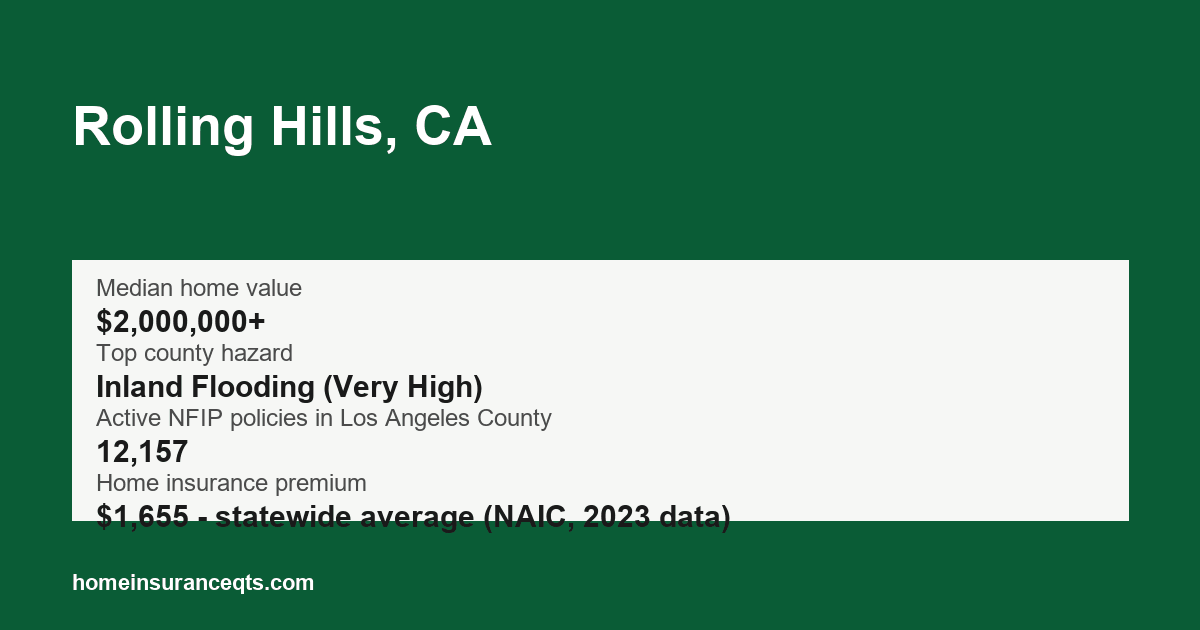
The median home value in Rolling Hills is $2,000,000+.
The typical home in Rolling Hills was built around 1960. Aging wiring, roofing and plumbing in older homes can push up the cost to insure or rebuild them. About 51% of homes were built before 1960, about 8 points above Los Angeles County's 43%.
In Rolling Hills, the housing stock is 100% single-family homes.
About 65% of owner-occupied homes in Rolling Hills have a mortgage. Lenders require hazard (homeowners) insurance on any home carrying a mortgage.
About 94% of occupied homes in Rolling Hills are owner-occupied. The vacancy rate is 11%; vacant or unoccupied homes typically need a different coverage form than an owner-occupied policy.
Most homes in Rolling Hills - 72% - are primarily heated with natural gas.
Los Angeles County had 12,157 active NFIP flood policies as of September 2026. Its top FEMA-rated hazard is inland flooding (Very High). See the full Los Angeles County home insurance overview for all FEMA hazard ratings and flood coverage details. Flood damage is excluded from a standard homeowners policy.
In California, the statewide average premium for a standard HO-3 homeowners policy is $1,655 per year (NAIC, 2023 data).
Key figures
| Median home value | $2,000,000+ |
|---|---|
| Median year built | 1960 |
| Owner-occupied share | 94% |
| Share of owner-occupied homes with a mortgage | 65% |
| Top county hazard | Inland Flooding (Very High) |
| Active NFIP policies in Los Angeles County | 12,157 |
| Home insurance premium | $1,655 - statewide average (NAIC, 2023 data) |
Nearby towns
- Rolling Hills Estates
- Rancho Palos Verdes
- Palos Verdes Estates
- Torrance
- Redondo Beach
- Hermosa Beach
- Lawndale
- Gardena
Sources
Data last updated: 2026-09-29
- U.S. Census Bureau Gazetteer Files (2024)
- U.S. Census Bureau, American Community Survey 2020-2024 5-Year Estimates (2024)
- FEMA National Risk Index (December 2025)
- FEMA OpenFEMA NFIP Redacted Policies v3 (2026)
- NAIC Dwelling Fire, Homeowners Owner-Occupied, and Homeowners Tenant and Condominium/Cooperative Unit Owners Insurance: Data for 2023 (published 2026) (2023)